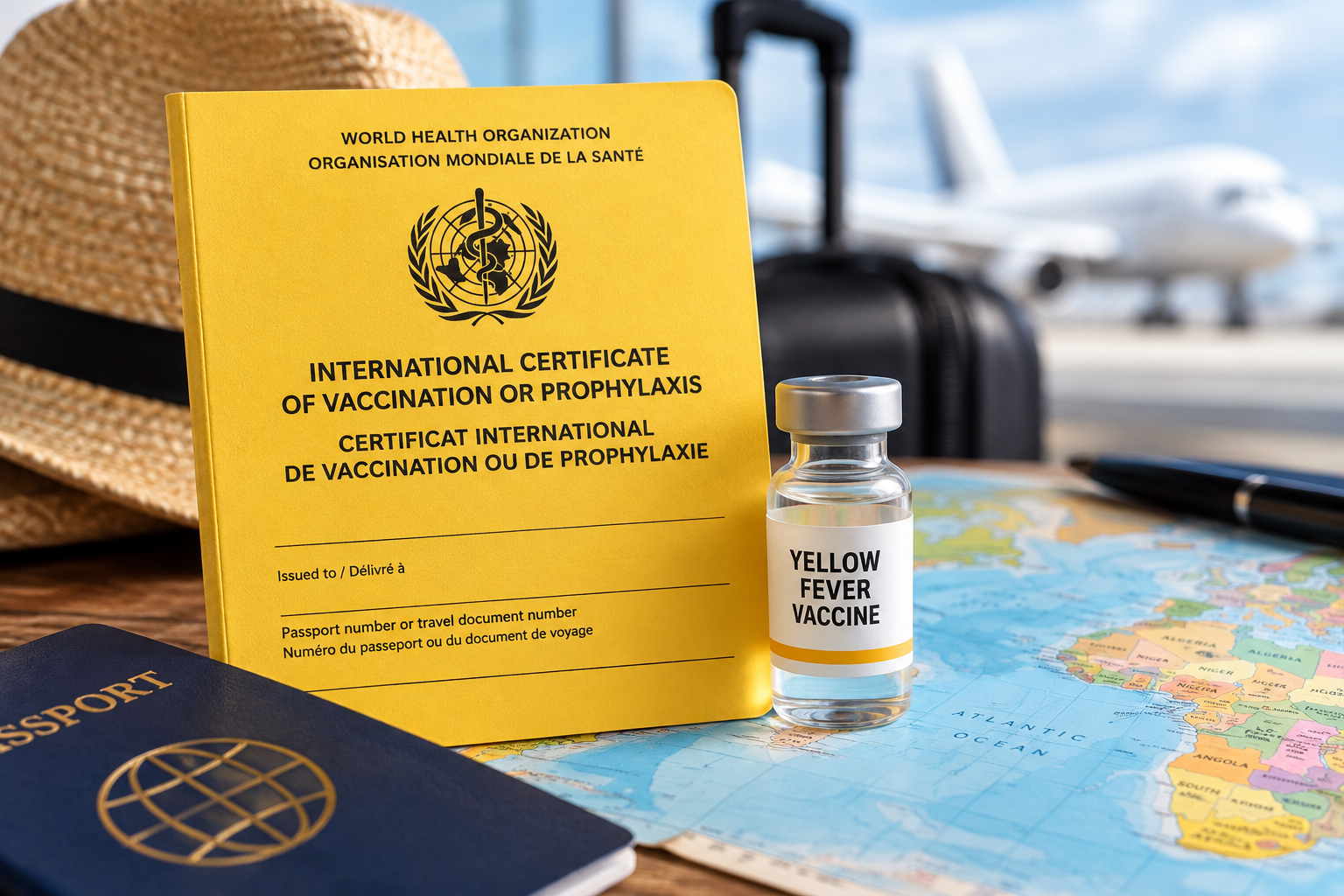
International travel sometimes requires more preparation than booking a flight and packing a suitcase. Depending on your destination, you may need a yellow fever vaccine, an International Certificate of Vaccination or Prophylaxis, malaria prevention medication, or a plan for managing travelers’ diarrhea.
Hi Doc Medical Center is an authorized Yellow Fever Vaccination Center located in Oakland Park, Florida, near Fort Lauderdale. We provide destination-specific travel consultations, yellow fever vaccination for eligible travelers, the official Yellow Card, typhoid vaccination, malaria prophylaxis prescriptions, and travelers’ diarrhea guidance.
What Is Yellow Fever?
Yellow fever is a mosquito-borne viral illness found primarily in certain parts of Africa and South America. Some infections are mild, but severe yellow fever can cause jaundice, bleeding, organ failure, and death.
There is no specific medication that cures yellow fever. Vaccination and mosquito-bite prevention are the primary methods of protection.
Do I Need a Yellow Fever Vaccine?
Whether you need the vaccine depends on:
- The country or countries you are visiting
- The specific regions included in your itinerary
- The length and type of travel
- Your planned activities and accommodations
- Countries you will pass through during layovers
- Your age, medical history, medications, and immune status
- The destination’s entry requirements
A country may recommend yellow fever vaccination because the disease is present there. Another country may require proof of vaccination because you are arriving from, or recently traveled through, a country where yellow fever occurs.
Even a layover can affect entry requirements in some situations. Bring your complete itinerary to your travel consultation, including connecting airports and the length of each layover.
How Early Should I Get the Yellow Fever Vaccine?
Schedule your travel consultation as soon as your trip is confirmed—preferably four to six weeks before departure.
For a first yellow fever vaccination, the International Certificate of Vaccination or Prophylaxis becomes valid 10 days after the vaccine is administered. Travelers vaccinated fewer than 10 days before arrival may not meet a destination’s entry requirement.
Last-minute travelers should still schedule a consultation. The provider can review the itinerary, explain the current requirements, administer appropriate vaccines when medically suitable, and discuss other risk-reduction measures.
What Is the Yellow Card?
The International Certificate of Vaccination or Prophylaxis, commonly called the ICVP or Yellow Card, is the official document used to show proof of yellow fever vaccination during international travel.
Yellow fever vaccine must be administered by an authorized vaccination center for the Yellow Card to be properly completed and validated with the center’s official uniform stamp.
For most travelers, one yellow fever vaccine dose provides long-lasting protection, and a properly completed Yellow Card is valid for the lifetime of the vaccinated person. Certain travelers may need an individualized assessment to determine whether an additional dose should be considered.
Keep the original Yellow Card with your passport when traveling. A photograph or electronic copy may be useful as a backup, but it may not replace the original document at an international border.
What Should I Bring to My Appointment?
Bring the following to your travel medicine appointment:
- Your complete travel itinerary
- Your passport or government-issued identification
- The countries and cities you will visit
- Connecting airports and layover durations
- Your departure and return dates
- Your vaccination records
- Your current medication list
- Information about medication or vaccine allergies
- Your previous Yellow Card, if you have one
- Relevant medical records for chronic or immune-related conditions
The name entered on your Yellow Card should match your passport or travel documentation.
Is the Yellow Fever Vaccine Safe for Everyone?
Yellow fever vaccination requires an individual medical assessment. Be prepared to discuss whether you:
- Have a severe allergy to eggs, gelatin, or another vaccine component
- Have an immune-system condition
- Take immune-suppressing medication
- Have a history of thymus disease or thymus surgery
- Are pregnant, planning pregnancy, or breastfeeding
- Are traveling with an infant or young child
- Are 60 years of age or older
- Previously experienced a serious vaccine reaction
These circumstances do not all lead to the same recommendation. The provider must compare the traveler’s exposure risk, entry requirements, and individual risk of a vaccine-related complication.
If vaccination is not medically appropriate, the provider can discuss mosquito precautions and whether a medical waiver may be considered. A destination country is not obligated to accept a waiver, so travelers should verify its requirements before departure.
Common Yellow Fever Vaccine Side Effects
Many people experience no significant problems after vaccination. Possible mild reactions include:
- Soreness at the injection site
- Headache
- Muscle aches
- Low-grade fever
- Fatigue
Serious reactions are rare but possible. Your provider will review the benefits, potential risks, precautions, and symptoms that require medical attention before administering the vaccine.
Does the Yellow Fever Vaccine Prevent Malaria?
No. Yellow fever and malaria are different mosquito-borne diseases.
The yellow fever vaccine does not prevent malaria, and malaria medication does not prevent yellow fever. Some destinations have risks for both diseases, so a traveler may need yellow fever vaccination, malaria prophylaxis, and mosquito-bite precautions.
Do I Need Malaria Pills?
Malaria risk can vary within the same country. A recommendation may depend on the specific cities or rural regions you will visit, the season, duration of travel, accommodations, activities, medication resistance, and your medical history.
Malaria prevention medications may include:
- Atovaquone-proguanil
- Doxycycline
- Mefloquine
- Chloroquine in destinations where it remains effective
- Other medications for selected travelers and destinations
The correct medication is not the same for everyone. Some options begin one or two days before entering a malaria-risk area, while others must be started earlier. Treatment also continues for a specific period after leaving the area.
Certain options are unsuitable during pregnancy, with particular medical conditions, or alongside specific medications. Some malaria medications require laboratory testing before they can be prescribed.
During your Hi Doc travel consultation, the provider can review your complete itinerary and determine whether malaria prophylaxis is recommended and which option may be appropriate.
Mosquito Protection Is Still Necessary
No vaccine or malaria medication replaces mosquito-bite prevention. Travelers should consider:
- Using an EPA-registered insect repellent
- Wearing long sleeves and long pants when practical
- Staying in screened or air-conditioned accommodations
- Using a mosquito net when sleeping areas are not adequately protected
- Treating clothing and travel gear with permethrin when appropriate
- Following the medication schedule exactly when malaria prophylaxis is prescribed
Seek urgent medical evaluation for fever during or after travel to a malaria-risk destination. Tell the healthcare professional where and when you traveled, even if you took malaria medication.
How Can I Prevent Travelers’ Diarrhea?
Travelers’ diarrhea can result from contaminated food or water. Careful choices can reduce the risk, although no strategy eliminates it completely.
Helpful precautions include:
- Drink factory-sealed bottled water or properly treated water
- Avoid ice unless you know it was made with safe water
- Choose food that is thoroughly cooked and served hot
- Avoid raw or undercooked meat and seafood
- Wash produce yourself with safe water or choose fruit you can peel
- Wash your hands with soap before eating
- Carry hand sanitizer containing at least 60% alcohol
- Avoid food that has been sitting at room temperature
Routine preventive antibiotics are not recommended for most travelers because of side effects, antibiotic resistance, and the risk of additional infections.
Should I Carry Medication for Travelers’ Diarrhea?
A provider may recommend a travel-health kit based on your destination, trip duration, medical history, and access to healthcare while abroad.
The kit may include:
- Oral rehydration salts
- Medication for symptom relief
- A prescription antibiotic for moderate or severe illness when medically appropriate
- Written directions explaining when each medication should and should not be used
Replacing fluids and electrolytes is an important part of treatment. Anti-diarrheal medication should not be used alone when diarrhea is accompanied by fever or blood in the stool unless directed by a healthcare professional.
Seek medical attention for bloody diarrhea, high fever, severe abdominal pain, persistent vomiting, signs of dehydration, worsening symptoms, or diarrhea lasting longer than expected.
Travel Medicine Services at Hi Doc Medical Center
Hi Doc Medical Center provides travel-health services for patients from Oakland Park, Fort Lauderdale, Pompano Beach, Plantation, and surrounding Broward County communities.
Services may include:
- Destination-specific travel consultation
- Yellow fever vaccination
- International Certificate of Vaccination or Prophylaxis
- Typhoid vaccination
- Malaria prophylaxis prescriptions
- Travelers’ diarrhea prevention and treatment planning
- Review of recommended routine and travel vaccines
- Guidance for last-minute travelers
Vaccine eligibility, medication prescriptions, and recommendations are determined after reviewing the traveler’s itinerary and medical history.
Yellow Fever Vaccination Center in Oakland Park
Hi Doc Medical Center 4513 NW 31st Avenue Oakland Park, Florida Phone: 954-289-3065
Appointments are available Monday through Saturday by appointment only. Travelers are encouraged to schedule early and bring their complete itinerary and vaccination records.
Frequently Asked Questions
Where can I get a yellow fever vaccine near Fort Lauderdale?
Hi Doc Medical Center is an authorized Yellow Fever Vaccination Center located at 4513 NW 31st Avenue in Oakland Park, near Fort Lauderdale. Eligible travelers can receive the vaccine and an officially validated Yellow Card after a travel-health evaluation.
How many days before travel should I get the vaccine?
The Yellow Card becomes valid 10 days after a traveler’s first yellow fever vaccination. Schedule four to six weeks before departure when possible so there is time to address vaccines, malaria medication, and other destination-specific needs.
Is the Yellow Card valid for life?
Yes. Under the International Health Regulations, a properly completed yellow fever vaccination certificate is valid for the lifetime of the vaccinated person. Some travelers may still need an individualized assessment regarding an additional vaccine dose.
Can a layover create a yellow fever requirement?
Yes. Some destinations require proof of vaccination from travelers arriving from or transiting through a country with yellow fever risk. The requirement can depend on the location and duration of the layover.
Does the yellow fever vaccine protect me from malaria?
No. Yellow fever and malaria are different diseases. Depending on the itinerary, a traveler may need both yellow fever vaccination and malaria prevention medication.
Can Hi Doc prescribe malaria medication?
Yes. After reviewing your destination, itinerary, medical history, allergies, medications, and other relevant factors, a provider can determine whether malaria prophylaxis is recommended and prescribe an appropriate option when medically suitable.
Can I receive travelers’ diarrhea medication before leaving?
A provider can discuss food and water precautions and determine whether standby medication is appropriate for your trip. Routine preventive antibiotics are not recommended for most travelers.
What happens if I lost my Yellow Card?
Bring any available proof of your previous yellow fever vaccination. An authorized center may be able to issue a replacement when the full vaccination details can be verified. If no reliable documentation exists, revaccination may be necessary.
Can I get vaccinated if I am pregnant, breastfeeding, immunocompromised, or over age 60?
These situations require an individualized risk assessment. The provider will consider your medical history, destination, likelihood of yellow fever exposure, and entry requirements before making a recommendation.
Do I need an appointment?
Yes. Hi Doc Medical Center provides travel medicine services Monday through Saturday by appointment only. Call 954-289-3065 or use the online booking system to schedule.
This article is for general educational purposes and does not replace an individualized medical evaluation. Vaccine requirements, disease risks, outbreaks, and destination entry rules can change. Travelers should receive recommendations based on their current itinerary, medical history, and official destination guidance.
Last reviewed: November 2026